
Waitlist open
An Instagram Carousel Maker Where Every Slide Is Real Type
A carousel is not one design, it is six to ten designs that have to look like siblings. DesignerOP splits that job in two: a multi-slide builder where every slide is real layers and real editable text, and separate video-to-carousel and text-to-carousel makers that draft the set for you. Both are in prelaunch with an open waitlist.
Retype any slide. The rest stays exactly as it was.
5 slides
real text · one deck · export 1080 × 1350
How it works
Three steps, then you post.
-

1 Paste
A video link or two lines of script. The maker reads it, you don't.
-
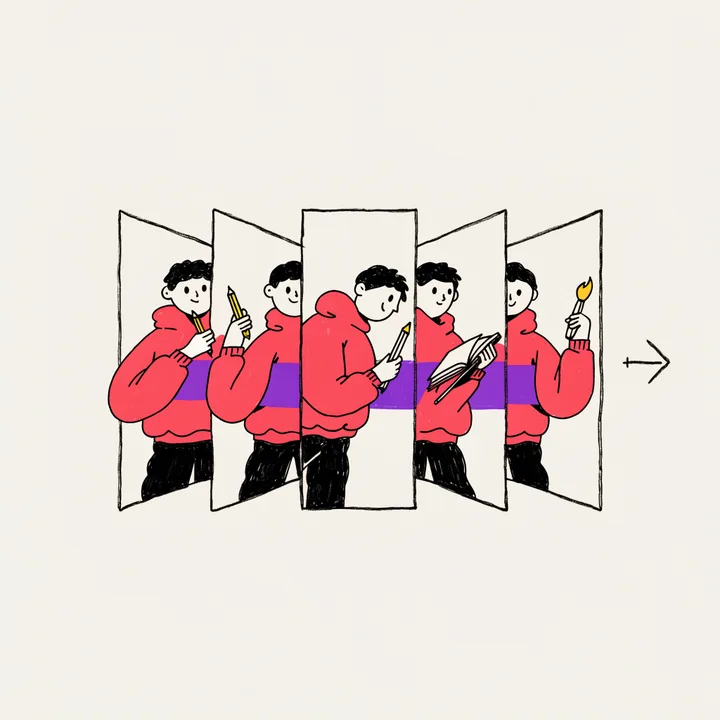
2 Deck
One shape, one type scale, one band across the whole set.
-

3 Post
Every slide is real type, so fixing a line takes seconds.
Two different things live here, on purpose
Most tools blur this and the result is a mess: an "AI carousel generator" that half-edits, or an editor that pretends to automate. DesignerOP keeps the line sharp.
The carousel builder is a design surface. It is a layer-based editor across multiple slides. You drag things. Nothing is generated behind your back, and every element you can see is its own object.
The carousel makers are automation. You hand over a video or a script, and you get a draft carousel back slide by slide. That is the whole interaction. They are not editors and they do not pretend to be one, because the moment a draft exists, it belongs in the builder where you can actually work on it.
Consistency across slides is the whole game
One good slide is easy. Seven slides that look like one document is the part that takes an evening, because every slide has to share a type scale, a margin, a colour and a rhythm. Do it by hand across seven files and slide five always drifts.
There is also a hard mechanical rule underneath: Instagram displays an entire carousel at the aspect ratio of its first slide. One odd-sized image in the set and everything after it gets cropped to match. That single fact is what breaks most hand-made attempts, and it is why the builder holds one shape for the whole set: 1080 × 1350 at 4:5, the tallest shape the feed shows, or 1080 × 1080 if the slides also need to sit neatly in your profile grid.
Why the makers write slides instead of grabbing frames
The obvious way to turn a video into a carousel is to screenshot it. It does not work, for four reasons that all land at once. A 4:5 slide keeps only about 45% of a 16:9 frame's width, and the part it keeps is rarely the part that mattered. Burned-in captions shrink to mush and a typo baked into a JPEG is permanent. A 1080p frame cropped to 4:5 yields at most 864 × 1080, so every slide is an upscale. And a frame from minute four means nothing to someone who never watched minutes one to three.
So the makers do the writing job: your video's argument, retyped as slides that start at the right shape. The full method, including what a good slide sequence looks like, is in how to turn a YouTube video into an Instagram carousel.
Worth repeating: a carousel is not a summary of your video. It is the same argument, rewritten for someone who will never press play.
When a carousel is the right call
Carousels reward ideas that survive as six to ten one-line claims, and they earn saves, which is what makes educational content compound. Reels do a different job. The numbers on both, with sources, are in carousels vs Reels. If the idea is a moment rather than a lesson, build a Reel cover instead and keep the carousel for the follow-up.
What you can use on this site today
- Instagram carousel splitter: cut one wide image into seamless slides, all at one ratio, exported at 1080 wide.
- Social media image resizer: one composition out to every size a post needs.
- Colour palette extractor: six colours from a frame, so the slide set matches the video it came from.
- Font pairing previewer: pick the pairing once and reuse it on every slide.
Shipping the same idea to YouTube as well? The thumbnail builder runs the same layer engine at 16:9.
What it costs
The carousel builder is in both plans. Creator is $19 a month with 100 credits and covers building carousels slide by slide. The video-to-carousel and text-to-carousel makers sit in Studio at $39 a month with 200 credits. Annual billing is 30% off either way, one credit equals one generation, and editing is free forever. The pricing page has the credit maths.
Questions people ask
What is the difference between the carousel builder and the carousel makers?
The builder is a design surface: a multi-slide editor where every element on every slide is its own layer and you move things by hand. The makers are automation: you hand over a video or a script and get a draft carousel back slide by slide. The makers are not editors. Their output opens in the builder, which is where the layer work happens.
What size are Instagram carousel slides?
1080 × 1350 pixels, a 4:5 portrait ratio, is the tallest shape Instagram shows in feed and therefore takes the most screen on a phone. 1080 × 1080 square is the safer choice when the same slides also have to sit neatly in your profile grid. Instagram displays an entire carousel at the aspect ratio of the first slide, so every slide in a set needs the same shape.
Can I edit a slide the maker drafted?
Every slide the maker drafts opens in the carousel builder as real layers with real editable type. Rewriting a headline, moving an image or deleting a slide entirely is ordinary editing, and editing is free. The draft is a starting point, not a finished file you have to accept.
Does the video-to-carousel maker just screenshot frames?
No, and screenshots are exactly what makes most repurposed carousels bad. A 4:5 slide keeps only about 45% of a 16:9 frame's width, burned-in captions turn to mush at slide size, and a 1080p frame cropped to 4:5 yields at most 864 × 1080, so every slide is an upscale. The maker drafts written slides at the right shape instead.
Which plan includes the video-to-carousel maker?
The carousel builder is in both plans. The video-to-carousel and text-to-carousel makers are part of Studio at $39 a month with 200 credits, or $27.30 a month billed annually. Creator at $19 a month with 100 credits covers building carousels slide by slide yourself.
Can I make a carousel in DesignerOP today?
Not yet. DesignerOP is in prelaunch as of August 2026 with an open waitlist, and the builder and the makers open to waitlist members first. The free Instagram carousel splitter on this site works today and needs no account.
The design line between automation and layer editing is deliberate, and the about page explains why the product is split that way.
Also on DesignerOP: YouTube thumbnails · Reel and TikTok covers · pricing
Pricing
Simple plans. Honest credits.
1 credit = 1 generation. Editing is free forever.
- Creator, $19 a month, 100 credits, the carousel builder.
- Studio, $39 a month, 200 credits, plus both carousel makers.
- Annual billing takes 30% off either plan.
- Credit back on a failed generation.
- Cancel in one click.
Every plan detail, credit by credit, is on the pricing page.
Stop losing the swipe you earned.
Drop in a video or a script, get a carousel draft back, then edit every slide as real layers with real text. DesignerOP is prelaunch, and the waitlist is open.
no spam, one email when we launch